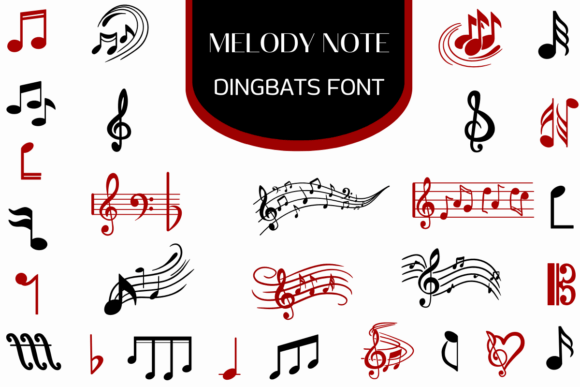
Melody Notes: The Creative Dingbats Font for Modern Projects
When you're working on a project that needs a spark of personality, sometimes the most impactful element isn't a word—it's a symbol. Melody Notes is a cool dingbats font designed to bring a unique, musical-inspired flair to your creative toolkit. Unlike a standard serif font or sans serif font, this typeface is built around decorative glyphs that can transform the ordinary into something memorable. Think of it as a secret weapon for adding visual interest where you least expect it.
What Exactly is Melody Notes?
At its core, Melody Notes is a dingbats font, meaning each keystroke produces a decorative symbol rather than a letter or number. Its visual character is rooted in musical motifs—think elegant treble clefs, flowing eighth notes, stylized piano keys, and abstract sound waves. The overall appeal is both artistic and approachable. It avoids being overly literal, offering symbols that feel modern and versatile rather than childish or niche. The line work is clean, making it scalable for various uses, and the style strikes a balance between whimsical and professional. This makes it a fantastic creative font for projects that need to convey creativity, rhythm, or a touch of sophistication without relying on traditional imagery.
Where This Font Truly Shines
The real value of a dingbats font like Melody Notes is in its application. It’s not meant for body text, but as a display font for accent elements, it can elevate your work across multiple mediums.
Branding and Visual Identity
For logo design, a single, well-chosen symbol from Melody Notes can become a memorable brand mark. Imagine a music school, a podcast, a café with live performances, or a creative agency using a stylized note as part of their brand identity. It’s an immediate visual shorthand. When used consistently on business cards, letterheads, and packaging, it builds recognition. For packaging design, these symbols can serve as decorative borders, dividers, or featured icons that tell a story about the product's essence—perhaps for artisanal goods, vinyl records, or creative software.
Marketing and Digital Content
In social media graphics, attention is currency. Using Melody Notes to create eye-catching bullet points, section dividers, or background patterns can make your posts stand out in a crowded feed. For web design, these glyphs can be used as custom list icons, loading animations, or decorative elements in a hero section, adding a layer of personality that stock icons can't match. Entrepreneurs and marketers can use them in presentations, infographics, and email newsletters to break up text and guide the reader's eye, improving visual hierarchy and engagement.
Publishing and Editorial Work
Editorial design often relies on subtle details to create a polished feel. Melody Notes can be used for drop caps, ornamental breaks between chapters, or decorative elements in the margins of a magazine or book layout. For bloggers and publishers, it offers a way to create a unique visual signature for recurring content sections, like a "Featured" or "Top Pick" series, enhancing brand consistency and reader recognition.
Crafting and Personal Projects
The applications extend beyond commercial use. Crafters and hobbyists can use the font to design custom invitations, greeting cards, scrapbook elements, or even decorative stencils. Its playful nature makes it ideal for personal projects where self-expression is the goal. Since it’s a digital font, it integrates seamlessly with design software like Canva, Adobe Illustrator, or Silhouette Studio.
Practical Guidance for Using Melody Notes
Integrating any new design asset requires a thoughtful approach. Here’s how to make the most of Melody Notes.
Evaluating Fit and Readability
First, assess if the font's personality aligns with your project's tone. Melody Notes is excellent for creative, artistic, or music-related themes but might not suit a formal legal document. Always consider readability—not of the symbols themselves, but of the surrounding text. Use it as an accent to complement your primary font pairing. For example, pair it with a clean modern typography choice like a geometric sans serif for a balanced look. Test it at different sizes to ensure symbols remain clear and impactful, especially for web design where screen resolution varies.
Exploring Styles and Pairings
Check what's included with the font package. Many premium fonts offer multiple styles or weights. Melody Notes might include variations like outline, filled, or shadowed versions of its symbols, giving you more flexibility. Experiment with font pairing by placing a few symbols next to your chosen headline and body fonts. The goal is harmony, not competition. A script font or handwritten font could work for a more organic feel, while a strong sans serif font provides a clean contrast.
Understanding Licensing for Commercial Use
This is critical. Melody Notes is a commercial font, which typically means you need a license to use it in projects you sell or for client work. Always review the license agreement included with your purchase. Licenses often specify the number of users, whether you can embed the font in digital files (like PDFs or apps), and if you can use it in print-on-demand services. Proper licensing ensures you’re using the font legally and supports the designers who create these valuable assets.
In a landscape saturated with standard typefaces, a dingbats font like Melody Notes offers a simple yet powerful way to inject originality into your work. It’s less about following trends and more about adding a distinctive, handcrafted touch that resonates. By thoughtfully applying its symbols, you can enhance visual storytelling, strengthen your brand's visual language, and create projects that feel genuinely engaging. Add it to your creative toolkit and discover how a few well-placed notes can change the entire composition.