American Cowboys: The Handwritten Script for Timeless Branding
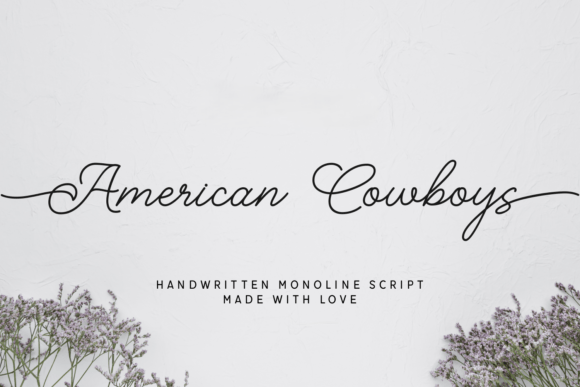
When you're building a brand or designing an invitation, the font you choose is more than just a container for words. It's the voice, the texture, and the first impression all wrapped into one. I've seen projects transform simply by moving away from a generic script and finding a typeface with genuine personality. That's where a font like American Cowboys enters the conversation. It’s a premium, handwritten monoline script that doesn't just mimic handwriting; it carries a story in its strokes.
The Visual Personality: Rustic Charm Meets Modern Elegance
Let's break down what you're actually looking at with American Cowboys. At its core, it's a script font, but it avoids the overly casual or chaotic feel of many handwritten styles. The "monoline" aspect is key here—each letter maintains a consistent stroke weight, creating a clean, flowing rhythm. This isn't a font that screams for attention; it invites you in with graceful, deliberate curves.
The charm lies in its balance. It has the warmth and imperfection of hand lettering, which adds a human touch to digital designs, but the smooth transitions between letters give it a polished, almost sophisticated air. Think of it as the typographic equivalent of a well-worn leather journal paired with elegant stationery. It’s this duality that makes it versatile. It feels both personal and professional, rustic yet refined. Unlike some overly ornate display fonts that can quickly date a design, American Cowboys has a timeless quality, drawing from classic calligraphic principles but filtered through a modern, accessible lens.
Where This Font Truly Shines: Practical Applications
Finding the right home for a creative font is about matching its personality to the project's goals. American Cowboys excels in contexts where you want to evoke emotion, authenticity, and a touch of luxury.
For brand identity and logo design, it's a standout choice for businesses in the lifestyle, boutique, artisan, or wedding industries. Imagine it on the logo for a countryside inn, a handcrafted goods store, or a high-end florist. It immediately communicates care, craftsmanship, and a personal touch. However, for a tech startup or a corporate law firm, its handwritten nature might understate the needed authority, where a clean sans serif font or a strong serif font would be more appropriate.
In editorial design and packaging design, its value is clear. Use it for chapter titles in a cookbook, pull quotes in a lifestyle magazine, or on the label of a artisanal food product. It adds visual interest and breaks the monotony of body text, guiding the reader's eye. For packaging, it can make a product feel handmade and premium, justifying a higher price point.
The digital space is where American Cowboys can really build engagement. For social media graphics, it cuts through the noise of standard system fonts. Use it for inspirational quotes, sale announcements, or story overlays. Its flowing lines are inherently more eye-catching in a static feed. It also works beautifully for web design elements like headers, hero text, or call-to-action buttons where you want a moment of stylistic impact, paired with a highly readable body font.
And of course, for personal projects like wedding invitations, greeting cards, or scrapbooking, it’s a natural fit. It provides the elegance of custom calligraphy without the associated cost or skill barrier, making beautiful design more accessible.
Making the Most of American Cowboys: A Designer's Practical Guide
Choosing a font is one thing; using it effectively is another. Here’s some practical advice for integrating American Cowboys into your workflow.
First, always test for readability. While it's a beautifully crafted script, its legibility can diminish at small sizes or in long paragraphs. It's not a body text font. Its strength is in headlines, short phrases, and accent text. Pair it with a simple, neutral sans serif or a clean serif font for any longer copy. This creates a clear visual hierarchy, where American Cowboys draws attention and the supporting font ensures comfortable reading.
When evaluating if it’s the right font pairing, consider contrast. A bold, geometric sans serif can create a striking modern contrast. A classic serif with moderate weight can create a more harmonious, traditional feel. Avoid pairing it with another script or an overly decorative font, as this leads to visual clutter.
Examine the included styles and glyphs. A quality premium font like this often comes with alternates, ligatures, and swashes. These are your tools for customization. Swashes can add a flourish to a capital letter at the start of a title, while alternates allow you to change the look of a repeated letter to maintain a natural, hand-lettered feel. Take the time to explore the character map.
Finally, understand the commercial licensing. If you're a business owner, entrepreneur, or using this for client work, ensure the license covers your intended use. Most reputable font licenses allow for use in logos, websites, and printed materials, but it's your responsibility to verify. This protects you legally and ensures you're respecting the work of the type designer.
In the end, American Cowboys is more than just a creative font; it's a versatile design asset. Its true power lies in its ability to add a layer of human warmth and sophisticated charm to a project, helping you build a stronger, more memorable brand identity or create more impactful social media graphics. Use it thoughtfully, pair it wisely, and it can become a cornerstone of your visual storytelling.