Why Cute Outline Is Your Next Go-To Creative Font
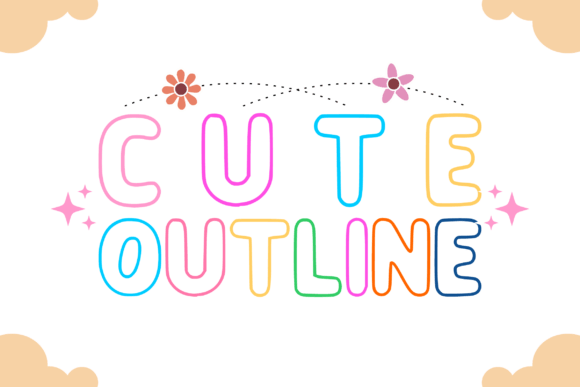
There’s a particular kind of joy in a font that doesn’t take itself too seriously. It’s the typographic equivalent of a friendly smile—a design choice that immediately sets a welcoming, approachable tone. That’s the essence of Cute Outline, a contemporary children’s font that feels less like a rigid typeface and more like a playful collaborator. Its charm lies in its delightful, hand-drawn outline style, where each character is crafted with a personality that’s both engaging and unmistakably friendly.
For designers, marketers, and creators, this isn't just another novelty font. It's a strategic tool. The visual style of Cute Outline—clean, outlined letters with a soft, rounded quality—walks a brilliant line. It feels modern and polished enough for commercial projects, yet retains the warmth and whimsy that connects with audiences on an emotional level. Think of it as a premium font with a down-to-earth soul. It’s a display font built not just for headlines, but for creating moments of delight.
Where Playful Typography Meets Real-World Projects
The true test of any creative font is its versatility. Where does a typeface like Cute Outline actually shine? The answer is surprisingly broad, moving far beyond the children's section of a bookstore. Its strength lies in projects where approachability, clarity, and a touch of fun are paramount.
- Branding & Marketing with Heart: If your brand identity leans toward the friendly, organic, or innovative, Cute Outline can become a cornerstone. It’s exceptional for logo design for family-centric businesses, boutique bakeries, educational apps, or indie toy makers. In packaging design, it makes product names and descriptions pop with personality, especially on items like artisan foods, craft supplies, or wellness products. For social media graphics, it’s a secret weapon—perfect for Instagram story templates, YouTube thumbnails, or Pinterest pins that need to stop a scroll with friendly energy.
- Digital & Editorial Joy: In web design, use it for landing page headers or call-to-action buttons where you want to reduce friction and increase clicks. It’s brilliant for editorial design in parenting magazines, lifestyle blogs, or recipe books, adding a layer of visual interest to pull quotes and section titles. Animators and game designers will find it ideal for UI elements, comic book titles, or character dialogue bubbles where legibility and charm are non-negotiable.
- Craft & Commerce Unite: This is where Cute Outline becomes a powerhouse for entrepreneurs and hobbyists. Its clean outline is perfect for vibrant sublimation designs. Imagine it on a tote bag, a coffee mug, or a children’s t-shirt—the design remains crisp and full of character even when applied at scale. For printables, greeting cards, and sticker sheets, it offers that professional, polished look that customers associate with quality.
Making It Work: Practical Guidance for Designers and Creators
Adopting a new typeface into your workflow is about more than just liking how it looks. It’s about ensuring it serves the project’s goals. Here’s how to evaluate and implement a font like Cute Outline effectively.
Evaluating Fit and Function
Start by asking: what is the primary role of the text? Cute Outline is a display font, meaning it’s engineered for impact at larger sizes. It’s your headline, your title, your featured quote. It is not, by design, a body copy font. Pairing it with a clean, highly legible sans serif font or even a simple serif font for paragraphs is essential to maintain readability and establish a clear visual hierarchy. For example, pairing Cute Outline with a font like Open Sans for body text creates a dynamic yet balanced contrast.
Understanding the Personality
Every font carries an emotional weight. Cute Outline communicates friendliness, creativity, and modernity. It can influence brand perception by making a brand feel more accessible and less corporate. This is a strategic choice. A law firm might avoid it, but a tech startup focused on creative collaboration tools would find it aligns perfectly with their brand identity. Its consistency across a project—from a website header to social media posts to merchandise—reinforces brand recognition and builds a cohesive aesthetic.
Practical Implementation Tips
- Test Thoroughly: Before committing, test the font in context. How does it look on a dark background versus a light one? Does the outline style hold up when scaled down very small? Check its performance in both digital and print mockups.
- Review the Character Set: A good commercial font like Cute Outline will include more than just letters. Look for numerals, punctuation, and often multilingual support. Ensure it has the characters your project needs.
- Respect the License: If you’re using it for client work, merchandise, or digital products, verify the licensing. Most premium fonts have clear terms for commercial use, which is a non-negotiable step for professional work.
- Embrace Font Pairing: Don’t let Cute Outline work alone. Pair it with a script font for a more whimsical feel in certain contexts, or with a geometric sans serif for a clean, modern contrast. The goal is to let its personality shine without overwhelming the entire design.
In the vast landscape of modern typography, finding a font that is both distinctive and functional can be a challenge. Cute Outline offers a rare combination: it’s a creative font with genuine commercial utility. It’s a design asset that doesn’t just decorate a page but actively contributes to the narrative, making your message more engaging and your brand more memorable. Nurture your creativity with it, and you might just find it becomes one of those indispensable tools in your design toolkit.