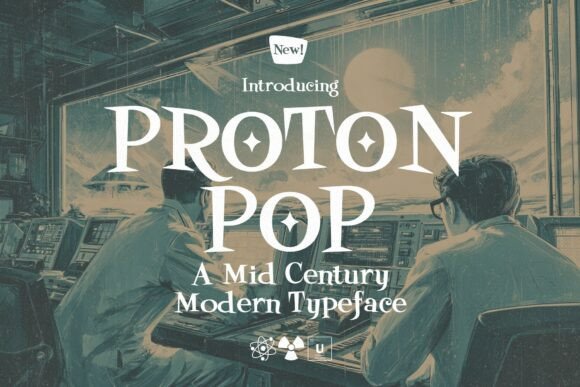
Proton Pop: Your Ticket to Retro-Futuristic Design
The Atomic Age Meets Modern Design Needs
There's a particular kind of optimism baked into mid-century design. It's the feeling you get from a streamlined car tailfin, the curve of an Eames chair, or the bold lettering on a vintage sci-fi paperback cover. Proton Pop taps directly into that visual language. This premium font isn't just a nostalgic throwback; it's a carefully engineered tool for today's creative professional. It captures the sleek geometry and playful confidence of the 1950s and '60s, a period when design genuinely believed the future would be bright, clean, and exciting.
What makes Proton Pop stand out in a crowded field of retro-inspired typefaces is its balance. It has the bold, rounded shapes characteristic of the era, but it avoids looking kitschy or overly cartoonish. The letterforms are clean and legible, with a subtle warmth that makes them approachable. Think of it as the typographic equivalent of a well-preserved vintage radio—recognizably of its time, but with a timeless quality that feels intentional and stylish. For designers, this means you get a powerful display font with a strong personality that doesn't sacrifice functionality.
Where Proton Pop Truly Shines: Real-World Applications
The true test of any creative font is how it performs in the wild. Proton Pop's versatility is one of its greatest strengths, making it a valuable addition to any designer's toolkit of design assets. Its character works exceptionally well in contexts where you need to make an immediate, memorable impact.
Branding and Logo Design
For brands targeting a sense of innovation, fun, or timeless cool, Proton Pop offers a distinct voice. Consider using it for a boutique brewery, a retro-themed diner, a tech startup with a playful edge, or an artisanal ice cream shop. In logo design, its strong geometric forms create memorable marks that are highly scalable from a favicon to a storefront sign. It helps build a brand identity that feels both established and energetic.
Editorial and Packaging Design
On a magazine cover or a book jacket, Proton Pop can set a compelling tone. It works beautifully for headlines related to culture, design, history, or lifestyle. In packaging design, it's a natural fit for products that want to convey craftsmanship with a twist—think gourmet sodas, specialty coffee blends, or vinyl record sleeves. The font's presence on a shelf can stop a customer in their tracks, communicating quality and personality before they even read the product description.
Digital and Social Media
In the fast-paced world of web design and social media graphics, standing out is critical. Proton Pop excels as a headline font for websites, landing pages, and digital ads. Its high legibility at various sizes ensures your message gets across on screens. For social media, it's perfect for creating eye-catching quote graphics, promotional posts, or story overlays that feel cohesive and professionally designed. It helps content creators and small business owners maintain a consistent and engaging visual style across platforms.
Making It Work: Practical Guidance for Using This Typeface
Adopting a new typeface with such a strong personality requires some thoughtful consideration. Here’s how to get the most out of Proton Pop in your projects.
Evaluating Project Fit
Start by asking if the project's tone aligns with the font's retro-futuristic vibe. It's an excellent choice for projects that are playful, innovative, nostalgic, or bold. It might be less suitable for ultra-conservative corporate reports or highly formal legal documents. Always consider your target audience. Adults in the 20–50 range, especially those with an appreciation for design history, will likely respond positively to its aesthetic.
Mastering Font Pairing
A display font like Proton Pop rarely works alone. Successful font pairing is key. It pairs well with clean, neutral sans serif fonts for body text. A geometric sans serif can complement its mid-century feel, while a more humanist sans serif can soften its impact. For a more layered look, it can also work alongside a simple serif font. The goal is to create visual hierarchy: use Proton Pop for headlines and subheads to grab attention, and let a simpler font handle longer passages of text for readability.
Leveraging Its Features
With 232 glyphs and support for 68 languages, this is a fully functional commercial font built for real-world use. Before starting a project, review the full character set. You might find useful alternate characters or ligatures that add extra flair to a headline. Always test the font in your specific application—whether it's Adobe Illustrator, Canva, or a website builder—to ensure it renders correctly and maintains its intended impact.
Considering Readability
While Proton Pop is designed for clarity, its display nature means it's best used for short bursts of text: headlines, logos, pull quotes, and labels. For body copy, always opt for a more traditional serif or sans serif font. Pay attention to tracking (letter-spacing) and leading (line-spacing) when setting headlines to ensure optimal readability, especially at smaller sizes or on complex backgrounds.
Ultimately, Proton Pop is more than just a font; it's a design statement. It allows you to inject a dose of Atomic Age optimism and mid-century sophistication into contemporary projects. By understanding its strengths and applying it thoughtfully, you can create work that feels both refreshingly unique and professionally polished. It’s a tool for building visual stories that resonate with confidence and a touch of timeless, space-age cool.