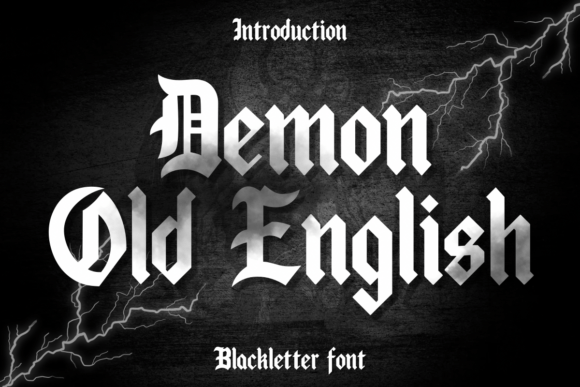
Demon Old English: A Blackletter Font for Bold Branding
There’s a certain weight to the past. It’s in the stone of old cathedrals, the ink of handwritten manuscripts, and the typefaces born from that era. Demon Old English is a blackletter font that taps directly into this lineage. It’s not a gentle whisper; it’s a confident declaration. The sharp, angular strokes and intricate details of this typeface immediately evoke history, authority, and a touch of the dramatic. Think of it as the typographic equivalent of a finely crafted iron gate or an illuminated first letter in an ancient book—it commands attention and sets a specific, powerful tone.
While its roots are deep, the application of Demon Old English is surprisingly versatile. Its primary strength lies in projects where a strong, memorable first impression is non-negotiable. For logo design, particularly for brands in entertainment, craft beverages, artisanal goods, or any field wanting to project heritage and strength, this blackletter font can become the cornerstone of a compelling brand identity. It works exceptionally well for logos, wordmarks, and monograms where the name itself becomes the central visual element. However, its intricate details mean it shines brightest at larger sizes, making it a quintessential display font.
Where This Typeface Makes Its Mark
Understanding the ideal context for Demon Old English is key to using it effectively. It’s a specialist tool, not a workhorse. In editorial design, consider it for magazine cover mastheads, chapter titles, or pull quotes in features about history, music, or luxury. For packaging design, it can elevate a craft beer label, a hot sauce bottle, or the branding for a boutique candle line, instantly communicating a sense of tradition and quality. In the digital realm, it’s a powerful choice for a website’s hero header or the title of a blog post that demands gravitas, though pairing it with a highly readable sans serif font for body text is a critical step.
For entrepreneurs and small business owners, the font’s personality can be a strategic asset. Imagine it on the signage for a barbershop, a tattoo parlor, or a vintage clothing store. It translates beautifully onto physical goods: social media graphics announcing a product launch, stationery for a luxury brand, or even merchandise like t-shirts and mugs. The key is alignment. Does your brand’s story involve craftsmanship, rebellion, history, or authority? If yes, this creative font might be your perfect voice. If your brand is minimalist, friendly, or tech-forward, this typeface would likely create a disconnect.
Practical Guidance for Designers and Creators
Before you dive in, a few practical considerations will ensure success. First, evaluate your project’s specific needs. Demon Old English is a premium font designed for impact, so test it at the exact size you intend to use it. Its legibility at small sizes, such as in a paragraph of body copy, is limited—that’s the domain of a serif font or sans serif font. Always prioritize your audience’s ability to read the message. For a headline, its ornate style is an asset; for a description, it becomes a barrier.
Next, master the art of the font pairing. This blackletter typeface thrives alongside a clean, neutral companion. A simple geometric sans serif can provide a modern counterpoint, while a classic serif can create a sophisticated, timeless feel. The contrast allows the Demon Old English to stand out without overwhelming the viewer. Check the font package for included styles—many premium blackletter fonts come with alternate characters or stylistic sets that can add subtle customization to your work.
Finally, address the practicalities of use. Verify the commercial font licensing covers your intended applications, whether for a client’s logo design, a print-on-demand product, or a digital ad campaign. Using a licensed font is a mark of professionalism. When you integrate this typeface into your design assets, document its usage rules—size minimums, color pairings, and approved contexts—to maintain consistency across all touchpoints, from a website header to a printed invoice. This discipline is what separates good design from great, recognizable brand systems.
In the end, choosing a font like Demon Old English is a strategic decision. It’s a tool for storytelling. When applied thoughtfully, it doesn’t just display words; it imbues them with character, history, and an unmistakable presence that can define a brand’s visual language and leave a lasting impression on your audience.