Artisan Roast: A Handmade Sans Serif for Authentic Design
Finding a typeface that feels genuinely human can be a challenge in a world saturated with sterile, geometric fonts. Many designs call for something with warmth, character, and an organic touch that resonates on a personal level. This is where a handmade sans serif like Artisan Roast steps in. It’s not just a font; it’s a collection of carefully crafted letterforms designed to bring a tactile, authentic quality to your projects. Imagine a font that feels like it was drawn by hand, with subtle imperfections that give it soul—that’s the core appeal of Artisan Roast.
Artisan Roast is a premium font family with a distinct personality. It’s a sans serif, which means it lacks the small projecting features (serifs) at the ends of strokes, giving it a clean, modern base. However, its handmade construction sets it apart from typical sans serif fonts. The strokes have a slight, intentional irregularity, and the overall silhouette is soft and approachable. It avoids the cold precision of a geometric sans and the stark formality of a grotesque one. Instead, it offers a friendly, trustworthy voice perfect for projects that need to connect with people on a human level. Think of it as the typographic equivalent of a warm handshake or a handwritten note.
The Three Styles: Inside, Outline, and Regular
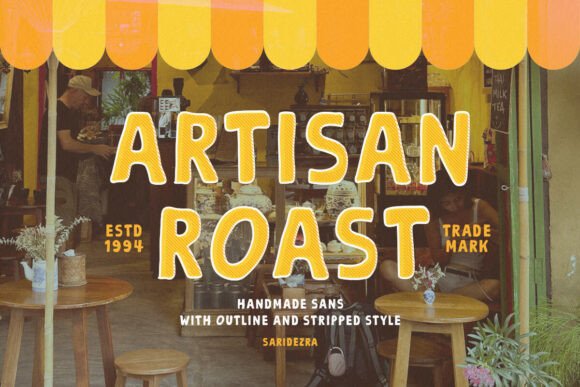
What makes Artisan Roast particularly versatile is its trio of styles: Regular, Inside, and Outline. The Regular style is your workhorse—a solid, readable handmade sans serif perfect for body text in shorter paragraphs, headlines, and subheadings. The Outline style presents the same letterforms as hollow shapes, which can create a stunning, airy effect when used for large display text or layered over images.
The magic, however, happens with the Inside style. This style is designed to be stacked directly beneath the Outline style. When you align the Outline and Inside styles perfectly, you create a beautiful, multi-dimensional effect where the outline appears to be filled with a contrasting color or texture. This stacking capability transforms Artisan Roast from a simple display font into a powerful creative tool. You can use it to craft logo design elements, social media graphics, or editorial headlines that immediately catch the eye and feel incredibly stylish. It’s a feature that encourages experimentation and adds significant value for designers looking for unique design assets.
Where Artisan Roast Truly Shines
This creative font is a chameleon, adapting beautifully to a wide range of applications. Its strength lies in projects where authenticity and a personal touch are paramount.
- Branding and Logo Design: For small businesses, cafes, craft breweries, artisanal product lines, or boutique studios, Artisan Roast can form the backbone of a brand identity. It communicates craftsmanship, care, and a hands-on ethos. Use the Regular style for your primary logotype and the Outline/Inside stack for dynamic secondary marks or patterns.
- Editorial and Packaging Design: In editorial design, such as magazine spreads, blog headers, or book titles, it injects personality without sacrificing clarity. For packaging design, especially on products like coffee, skincare, or gourmet foods, it reinforces the product’s handmade, premium quality.
- Digital and Web Design: While best used for headlines and calls-to-action rather than long-form body text, Artisan Roast works wonderfully in web design for hero sections, navigation menus, or buttons. It helps a website feel more approachable and less corporate. Its compatibility with various platforms makes it a reliable commercial font for digital projects.
- Personal and Creative Projects: For bloggers, content creators, and hobbyists, this font is a gem. Use it for quotes, social media graphics, wedding invitations, or personal branding. Its handwritten font qualities make it feel intimate and expressive, perfect for connecting with an audience on platforms like Instagram or Pinterest.
Practical Guidance for Using This Typeface
Choosing the right font is about more than just liking how it looks. Here’s how to evaluate and implement Artisan Roast effectively.
Evaluating Fit and Readability
First, consider your project’s voice. Does it need to feel warm, authentic, and human? If yes, Artisan Roast is a strong candidate. Always test it in context. Create a mock-up of your logo, a sample social media post, or a draft webpage. Check the readability at the size you intend to use it. As a display font, it’s fantastic for large headlines. For smaller text, ensure there’s sufficient line spacing and contrast. Its organic forms require a bit more breathing room than a rigid, geometric typeface.
Mastering Font Pairing
A great font pairing creates harmony and hierarchy. Artisan Roast’s friendly personality pairs well with a wide range of fonts. For a classic, readable combination, pair it with a clean, neutral serif font for body text. If you want a more modern feel, a simple, geometric sans serif can provide a nice contrast. For a truly organic look, consider pairing it with a subtle script font for accents. The key is to let Artisan Roast be the star for headlines and supporting elements, while the paired font handles longer passages of text.
Leveraging the Styles and Licensing
Don’t just use the Regular style. Experiment with stacking Outline and Inside to create those eye-catching effects. Use the Outline style alone for a more subtle, sophisticated look. Remember that as a premium font, Artisan Roast typically comes with a commercial license. Before purchasing for a client project or a product for sale, always review the licensing terms to ensure it covers your intended use, whether for print, digital, or merchandise. This due diligence is part of professional modern typography practice.
In a digital landscape crowded with uniformity, Artisan Roast offers a breath of fresh air. It’s a tool for designers, entrepreneurs, and creators who want their work to feel genuine, approachable, and memorably human. By understanding its characteristics and applying it thoughtfully, you can use this typeface to elevate your projects and forge a stronger connection with your audience.